
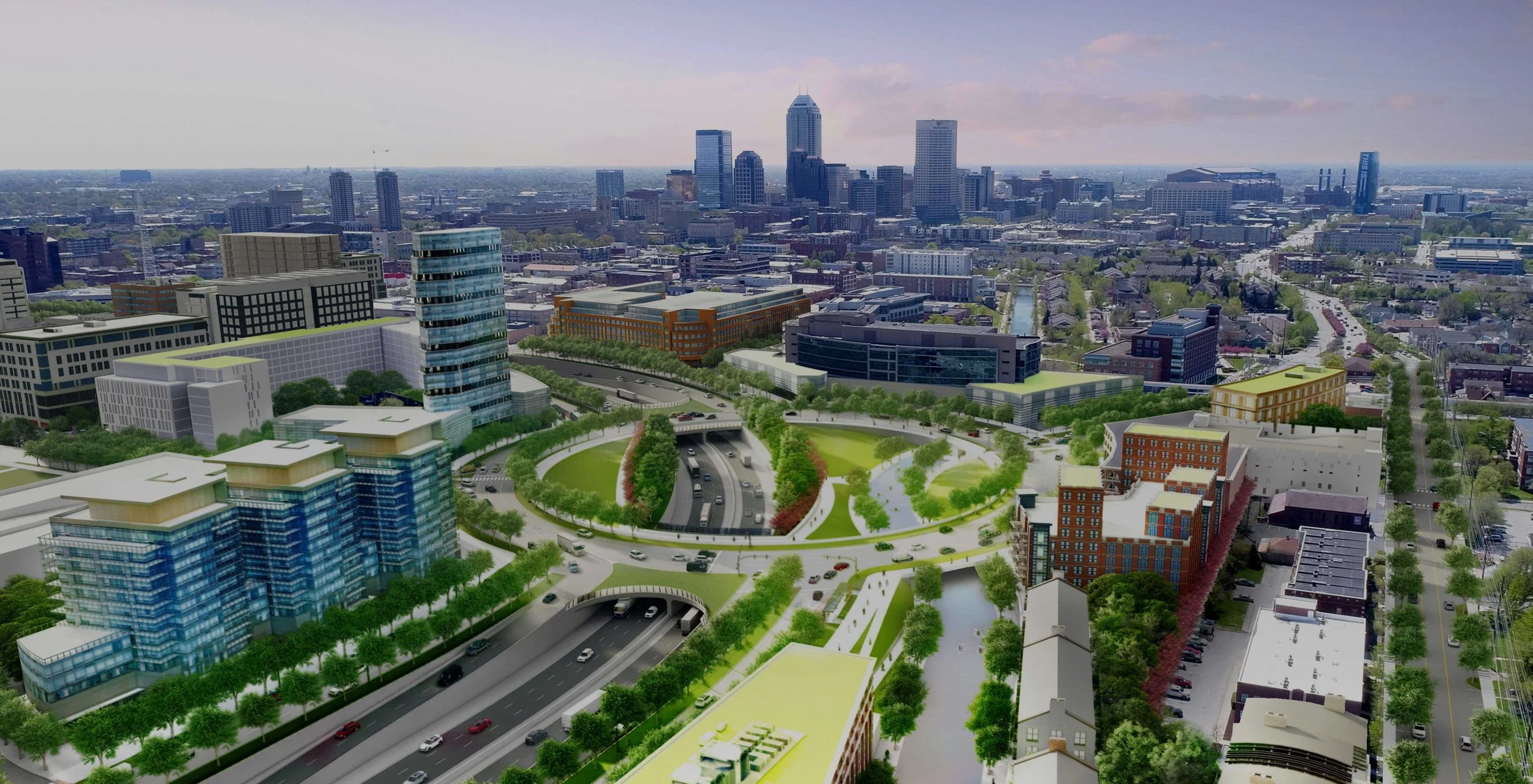
A bold future for Central Indiana
Rebuilt communities.
Revitalized economy.
Start by
Rethinking
I-65/I-70.
Just released:
Our I-65/I-70 Southeast Gateway Planning Study Report is live.
Decisions of the past don’t need to haunt the future.
The I-65/I-70 interstates were built over 50 years ago as part of the original U.S. Interstate Highway System. While the interstates offered new regional interconnectivity, their design also created challenges for metropolitan areas, which have lingered for decades.
Now aging and outdated, it’s time to rebuild them the right way—for the future, not the past.
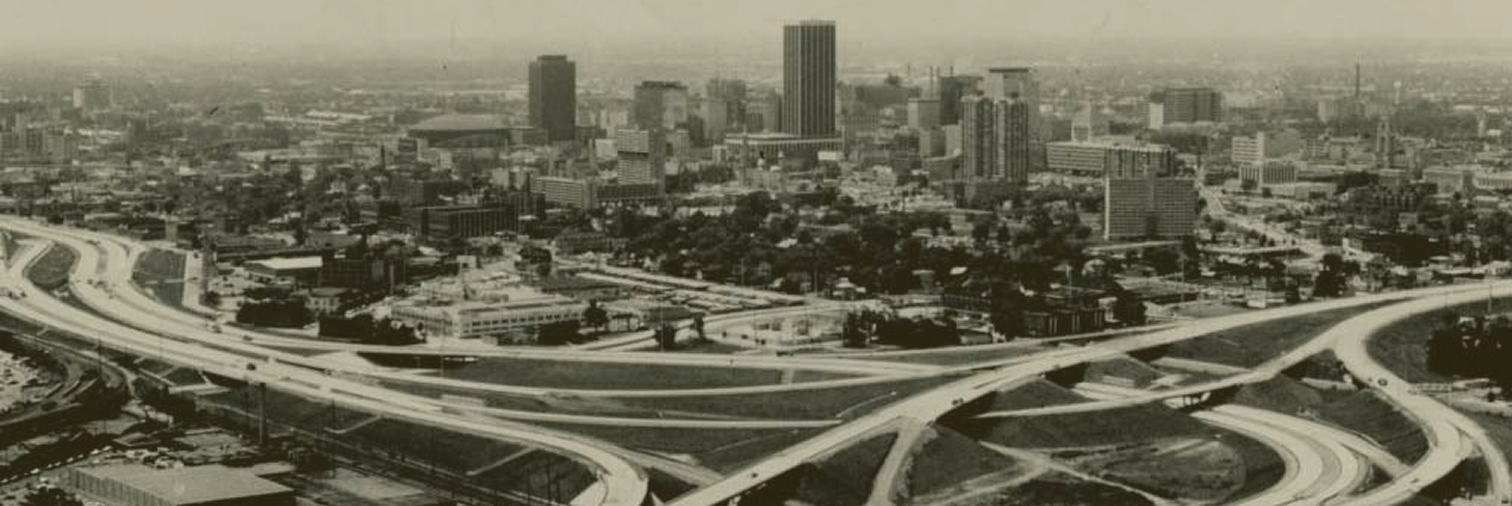
Photo: Bass Photo Co. Collection, Indiana Historical Society (1975)
Problems created by the
1960s interstates
Physical
barriers
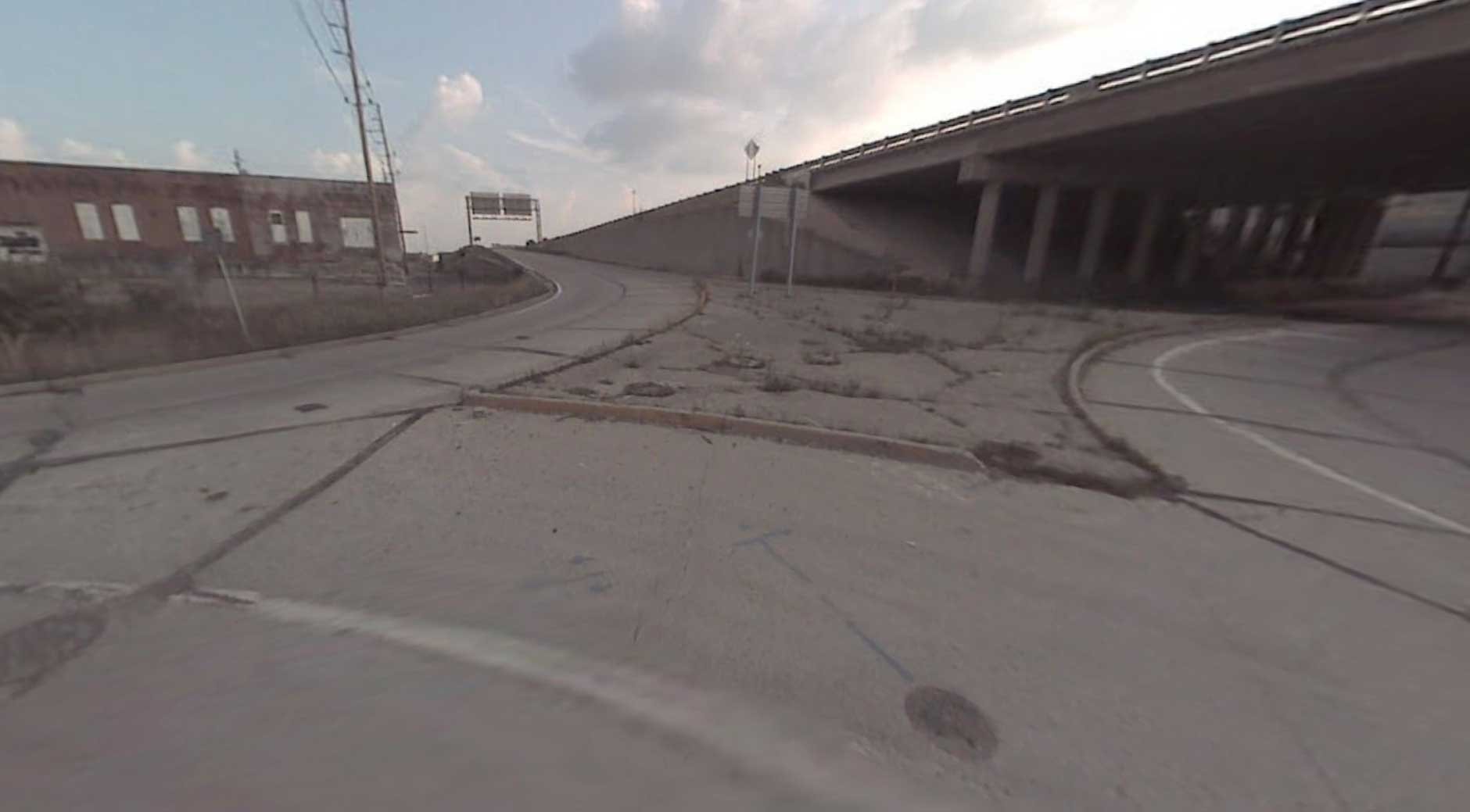
The interstates cut through communities, dividing up neighborhoods and fostering a sense of isolation and disconnection.
Economic
loss
The elevated interstates create dead zones for investment and development, stunting economic growth near the interstates..
Perceived
barriers
The elevated interstates create perceived barriers even where bridges and underpasses exist. Crossing over or under the interstates feels unwelcoming and can be dangerous.
Cars and trucks
only
The I-65/I-70 interstates perpetuate a world built for cars and trucks, deprioritizing pedestrian and cyclist safety.
Read more about how construction decisions of the 1960s still impact us today.
There’s no need to stay
stuck in the past.
There’s a better way.
We can:
Transform our existing interstate into an innovative, industry-leading system

Meet the needs of interstate automotive traffic
Free up 83 acres of developable land
Generate $2+ billion in economic development
Generate $55 million per year in additional property tax revenue
Improve the environment
Improve safety
Advance social equity
Rebuild neighborhood connectivity

We can have all this!
Our vision is a redesigned urban interstate system for the 21st century.
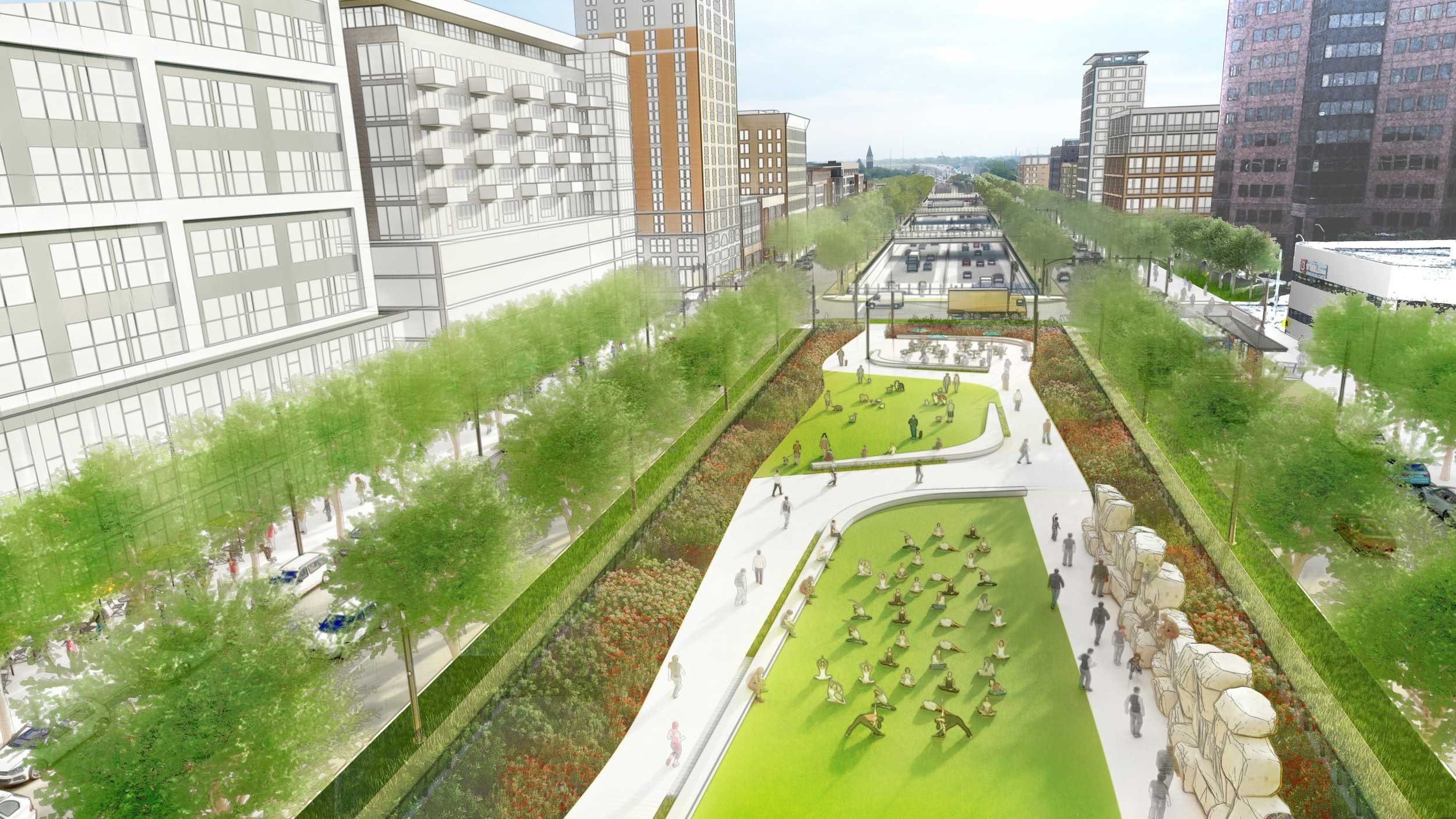
I-65/I-70 can be recessed in downtown Indianapolis
Recessing the interstate does not mean building tunnels.
Most of downtown Indianapolis' interstates are elevated, forming barriers that isolate the city’s core. Recessing these interstates—placing them in open-air trenches—and adding “caps” or land bridges can transform these divides.
Caps span a block or two and can support parks, housing, and other development. This approach compresses the interstate footprint, removes the physical interstate barriers, reconnects the city street grid and neighborhoods, unlocks new land, and fuels community and economic growth.
All while improving traffic flow.
Read more about our bold vision for how the interstates can serve the Indianapolis of tomorrow.
Is this possible?
Absolutely. It’s not only possible, it’s the safest, most practical option. It’s the best investment in Indiana’s future.
If we simply rebuild as-is,
we lose out.
Rebuilding the same outdated design locks ourselves into a flawed system for another
50+ years.
We’d miss the opportunity to set ourselves up for a better future.
Read our Visionary Study for details.
We conducted what we call our Visionary Study, comparing rebuilding the I-65/I-70 interstates “as-is” v. rebuilding them recessed. The Study applies base and expanded criteria for interstate construction to evaluate the two options.”
The recessed concept wins in every category, except construction complexity, and viable strategies exist to address the complexities.